
Sparkling Matcha Espresso
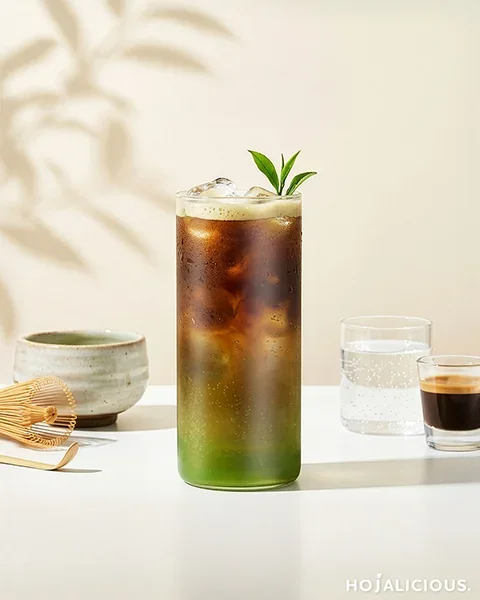
This Sparkling Matcha Espresso brings together ceremonial-grade matcha and a bold espresso shot in one clean, layered glass. Equal parts matcha coffee energy and sparkling tea refreshment, it's the kind of specialty drink that actually earns a spot on your permanent menu. Light, caffeinated, and visually striking — three steps, no blender required.
Not just a specialty drink — the one that does the talking for your menu
The first sip catches people off guard. The matcha comes through clean, with a quiet grassy front note — nothing muddy, nothing overwhelmed. It's the kind of texture you'd expect from a well-made matcha drink: bright, slightly mineral, with enough body to hold its own against carbonation. The sparkling water lifts everything, keeping the drink light and effervescent without wearing down the tea character. Then the espresso arrives mid-sip — rich, faintly bitter, grounding the whole thing without taking over. The cane sugar syrup sits underneath all of it, rounding the edges just enough that the sweetness reads as balance rather than addition. The finish is clean. You want another sip before you've processed the first.
The logic behind this matcha coffee comes down to understanding what each element actually does. Matcha needs lift — sparkling water gives it that. Espresso needs restraint — a float rather than a blend keeps it from dominating. A high-concentration matcha base is used as the foundation, pulled fresh with every order, so the green stays vivid and the flavor doesn't drift flat over ice. The result isn't a matcha latte, and it isn't a standard sparkling americano. It sits in its own category: a sparkling matcha build that carries the depth of a coffee drink.
Visually, the layering makes the case before anyone takes a sip. Green at the base, translucent through the middle, a deep brown espresso float on top — the gradient holds long enough to photograph, and long enough to land on the table with presence. For cafes building a specialty drinks program, this is the kind of item that moves on reputation. People order it after seeing it at the next table. The prep is fast, the ingredients batch well, and the execution is consistent once the density technique is locked in. It earns its place on the menu by doing the work itself.
Ingredients
Matcha Base Liquid — 30 ml
(Matcha Powder 25g + Warm Water 100ml)Espresso — 35 ml
Sparkling Water — 200 ml
Cane Sugar Syrup — 20 ml
Ice Cubes — 80% full
Directions
🧊 Prep | Make the Matcha Layer Base
Combine Matcha Powder 25g with Warm Water 100ml and whisk until fully dissolved and smooth. This forms the matcha layer base for the drink. Store at 0–4°C and use within 8 hours for best flavor and color.
Ice and Chill
Fill the serving glass with ice cubes to approximately 80% full. A well-chilled base keeps the layers defined and slows dilution during service.
Infuse Tea and Sparkle
Pour in the pre-made Matcha Base Liquid, followed by Cane Sugar Syrup and sparkling water. Stir gently 2–3 times with a bar spoon — enough to marry the sweet tea notes without collapsing the bubbles.
Float the Espresso Gradient
Slowly pour the espresso shot over the back of a bar spoon directly onto the ice, letting it settle on top of the matcha layer. It floats naturally, forming a green-to-brown gradient that holds its shape on the pass. Serve immediately without stirring.
🏷 Tips
Adjust the espresso volume based on your menu positioning — a smaller shot keeps the matcha coffee character forward, while a fuller pull adds depth for customers who prefer a stronger coffee finish.
Pour the espresso slowly over the back of a bar spoon to preserve the layered gradient. This technique ensures the sparkling matcha visual remains intact on the pass and holds long enough for table presentation.
The matcha base can be prepared in advance and stored at 0–4°C for up to 8 hours, making it suitable for high-volume service without compromising flavor consistency or color clarity.
Cane sugar syrup can be adjusted between 10–20ml depending on target sweetness level — lower ratios allow the matcha espresso bitterness to lead, while higher ratios create a more approachable, balanced profile.
This recipe is well-suited for year-round specialty drink menus and can be extended with oat milk foam, flavored syrups, or alternative sparkling bases to develop seasonal or signature variations.
